Read more at OfTwoMinds.comToday's asset bubbles in stocks, junk bonds, housing, art, bat guano futures, etc. are being driven by the Federal Reserve, which has replaced the nuisance of no-document liar loans with unlimited liquidity for bankers, financiers and insiders. The super-wealthy and corporate cronies can borrow as much nearly free money as they want from the Fed, without even bothering with qualifying for the credit.
Showing posts with label real estate. Show all posts
Showing posts with label real estate. Show all posts
Monday, June 16, 2014
Malinvestment is Poison says Charles Hugh Smith
Charles Hugh Smith explains "How Malinvestment Poisons the Entire Economy":

Thursday, June 5, 2014
Inflation Alert: Soaring Apartment Rents
Trulia reported this week that apartment rents nationwide are up nearly 6% in the last year.
Buried in the last paragraph of a Bloomberg story about the cooling housing market are details about inflation in the rental market. Three large California cities have seen ten percent hikes in housing costs in the last twelve months with San Francisco leading the way.
According to Trulia the median two-bedroom in San Francisco costs $3,550 per month. Rental costs city wide rose over 15% since last year.
Buried in the last paragraph of a Bloomberg story about the cooling housing market are details about inflation in the rental market. Three large California cities have seen ten percent hikes in housing costs in the last twelve months with San Francisco leading the way.
According to Trulia the median two-bedroom in San Francisco costs $3,550 per month. Rental costs city wide rose over 15% since last year.
Thursday, May 29, 2014
Why Rent? Because You Can Move.
Melchior Palyi was an economist who fled National Socialist Germany in 1933. Five years later he issued stern warnings to economic policy makers:
Full article about Palyi by Jason Zweig at The Wall Street Journal published in late 2010.
Palyi warned in 1938 that a push toward universal home ownership would "make the population fixed to the ground" by "overburdening them with housing costs."Renting offers mobility. This allows you to take advantage of economic opportunities and personal relationships that become available in other regions. For these and other reasons, home ownership is not always profitable.
Full article about Palyi by Jason Zweig at The Wall Street Journal published in late 2010.
Thursday, May 22, 2014
Inflation Rears It's Nasty Head
Speaking of a housing bubble. Prices of homes in England increased nearly 4% last month.
But don't worry the "fears of a housing bubble are misplaced" says Christopher Hope of The Telegraph:
Full story from The Telegraph.
But don't worry the "fears of a housing bubble are misplaced" says Christopher Hope of The Telegraph:
So according to the story a 5% annual increase in rent is modest. Is the average wage earner garnering 5% annual salary increases to keep up with inflation? Not likely.A breakdown suggested fears of a nation-wide housing bubble are misplaced, with London leading the way with a 16.3 per cent year-on-year increase, compared with a more modest 4.9 per cent in the rest of the country.
Full story from The Telegraph.
Sunday, May 18, 2014
Another Housing Bubble?!?!
It seems that bankers and home buyers the world over have already forgotten about last decade's housing bubble. Loose lending standards, low down payment requirements and really cheap credit have contributed to another housing boom.
From The Sydney Morning Herald:
Let's remember what a house actually is, a depreciating asset that costs money to maintain. It should not increase in value unless the land it sits on becomes more desirable. Increased appeal of land is logical in some cases (i.e. an oil discovery) but land values should remain very stable over centuries.
Things like this shouldn't occur...
So what will be the conclusion to this most recent housing bubble?
From The Sydney Morning Herald:
We are talking about returns of 6%+ per year from housing during The Great Recession.Nominal house prices have risen 29 per cent in Australia, 28 per cent in Canada and 61 per cent in Israel, form the first quarter of 2009 to now, according to Goldman Sachs.
Let's remember what a house actually is, a depreciating asset that costs money to maintain. It should not increase in value unless the land it sits on becomes more desirable. Increased appeal of land is logical in some cases (i.e. an oil discovery) but land values should remain very stable over centuries.
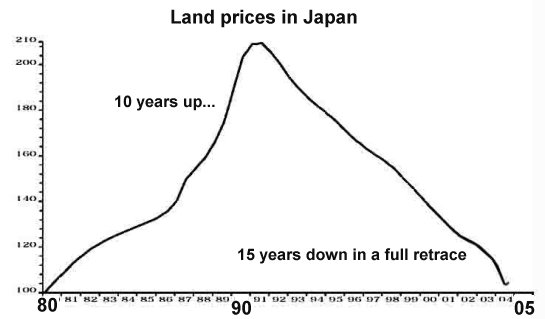
Things like this shouldn't occur...
 |
| Boom > Bust (from OfTwoMinds.com) |
So what will be the conclusion to this most recent housing bubble?
Monday, April 14, 2014
Does Nevada Qualify as a State?
 |
| Are the Western States Free? |
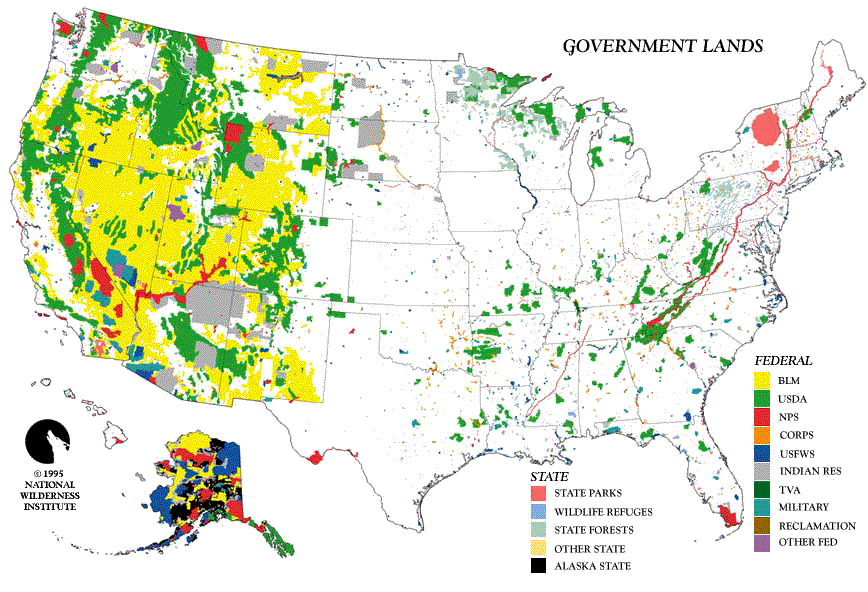
The U.S. federal government claims ownership of 28% of the United States. Besides Alaska the state with the most federal land is Nevada (57 million acres). The feds claim they own 81% of the real estate in Nevada.
Considering that only one-fifth of Nevada is not owned by the feds should we even consider it a free state?
Tuesday, April 1, 2014
Money Sloshing Around the Real Estate Market
For five year tenants of commercial real estate in the U.S. could thank the Federal Reserve and their loose monetary policy as a driving force behind rising rents. In addition to the massive increase in U.S. dollar supply renters now have a second force to be aware of, foreign investment.
From Bloomberg:
From Bloomberg:
Chinese developers are on an expansive shopping spree in the U.S. Completed commercial real estate transactions by Chinese investors in the six biggest metropolitan areas totaled almost $3 billion in 2013, up from $335.3 million the previous year, according to New York-based Real Capital.Keep in mind that the sellers of these properties have seen a nice fat profit in large part to low-interest loans received from banks since the 2008 financial crisis. Leverage can work wonders if your bet pays off.
Subscribe to:
Posts (Atom)